But the tech industry thrives on disruptive innovations, and the only way to fight harder than ever to protect your market presence is by remaining competitive. For that to happen, tech providers need to prioritize anticipating competitors' moves, just like their commitment to product research and development.
But how do executive leaders make out their best strategies when success depends on differentiation from competitors' campaigns and product releases?
Competitive intelligence — or CI, period.
This article covers techniques for gaining deep insights about your competitors' moves, how to analyze and weaponize those insights to protect your presence and win market share.
Let's get started.
What Is Competition Analysis Market Research?
Market research is the cornerstone of a successful business in a dynamic environment where consumers' values and behaviors constantly change.
And in a world where budgets are becoming increasingly tight, businesses are justifying the value of market research more and more. Unfortunately, conducting a market analysis is not a straightforward process that can be done with a few calculations. It requires looking into a host of factors that can influence research value.

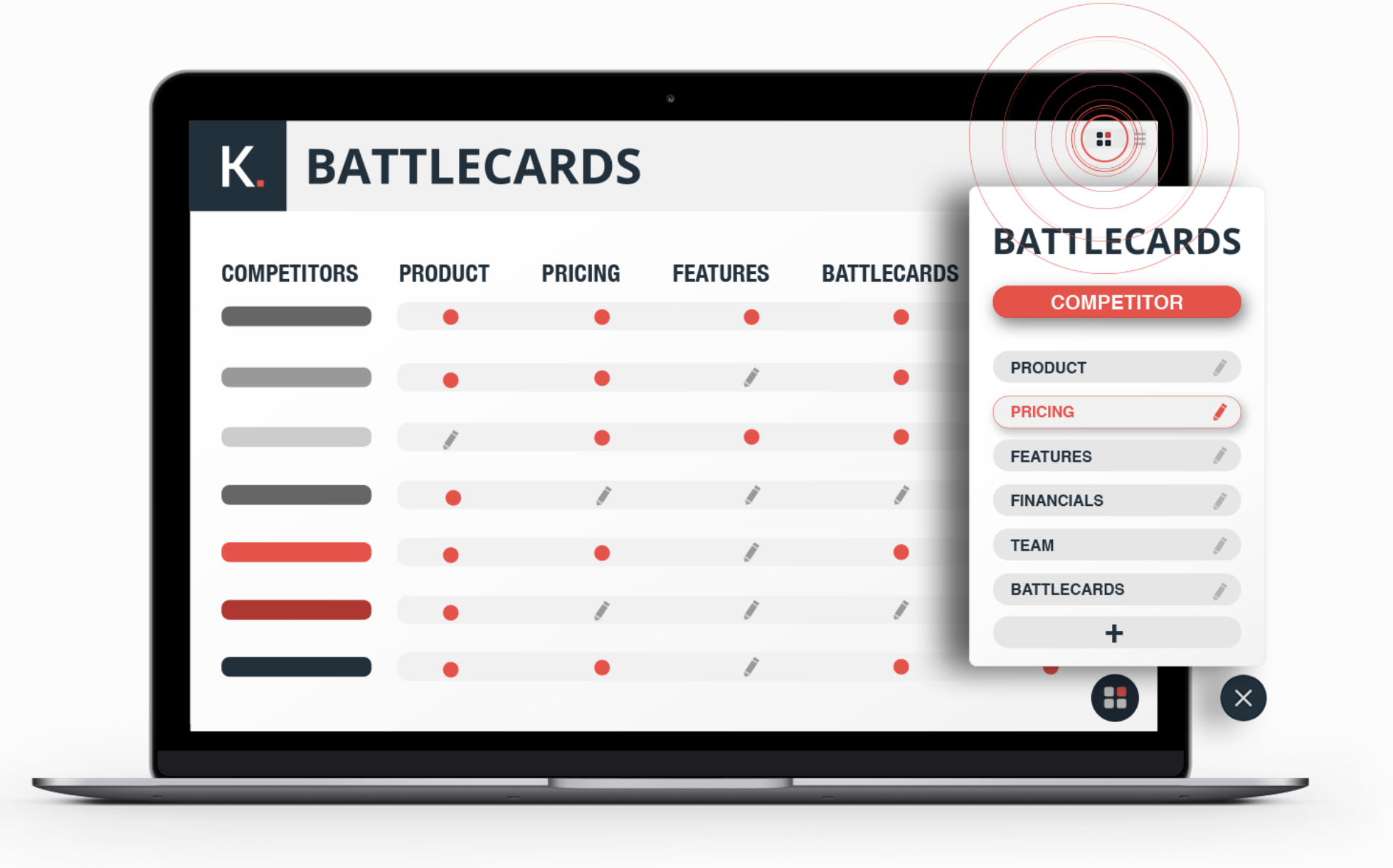
Competitive Audit template
A competitive audit template, also known as a competitor analysis template, is a model to make it simple to visualize and understand the competitive landscape. It helps businesses build a detailed profile for each of their main competitors and captures a wide range of information about their company, customers, and products.
These templates are usually easy to customize to align with how businesses assess the market. The insights provided help companies better position their offering to prospective clients based on the strengths and weaknesses of each competitor.
Download a battle card template to help you get started.
Why To Conduct a Competitive Analysis?
The purpose of competition analysis is to understand and compare a businesses' strengths and weaknesses to that of its competitors, which is critical for many reasons:
- Help recognize opportunities for improvement in the business strategy.
- Provide insights on how to outperform competitors and maintain your customer's attention.
- Gain a competitive edge in the market.
What Is Technology Competitive Intelligence
It is the process of tracking, analyzing, and activating information about what your competitors know about your company and what they are up to in terms of expanding operations in geolocations and vertical markets or creating new products. There's no substitute for competitive research to empower internal stakeholders to improve decision-making and execution and help take the necessary actions that outperform your competitor's offerings, thwart their efforts and prioritize yours, as well as identify acquisition targets for growing your business.
5 Major Goals of Technology Competitive Intelligence
1. Stand out from your competitors with better market positioning.
2. Win competitive deals.
3. Improve your product road-mapping process.
4. Increase customer satisfaction, which can directly lead to increased profitability and growth.
5. Enhance long-term business strategy, which increases market share and ultimately the profits.
Now that you know what the competitive technology analysis is and why it matters let's delve into how to conduct one.
How To Do Market Research For Analyzing Competitors
How to do competitor research, or how to do a competitor analysis? In order to analyze competition in your industry you can utilize several tools, review websites and market places. It depends on the depth of your analysis and what you want to accomplish.
After working with several platforms and tools following four are always the go-to option for us:
- Capterra
- G2
- Crunchbase
- Ahrefs
Capterra For Analysing Competitors In The Market
In order to start your research with Capterra, head-over to their homepage and type your product category such as password manager, chatting software and others.
In our example we are going to find out competitors in the auto repair shop management.
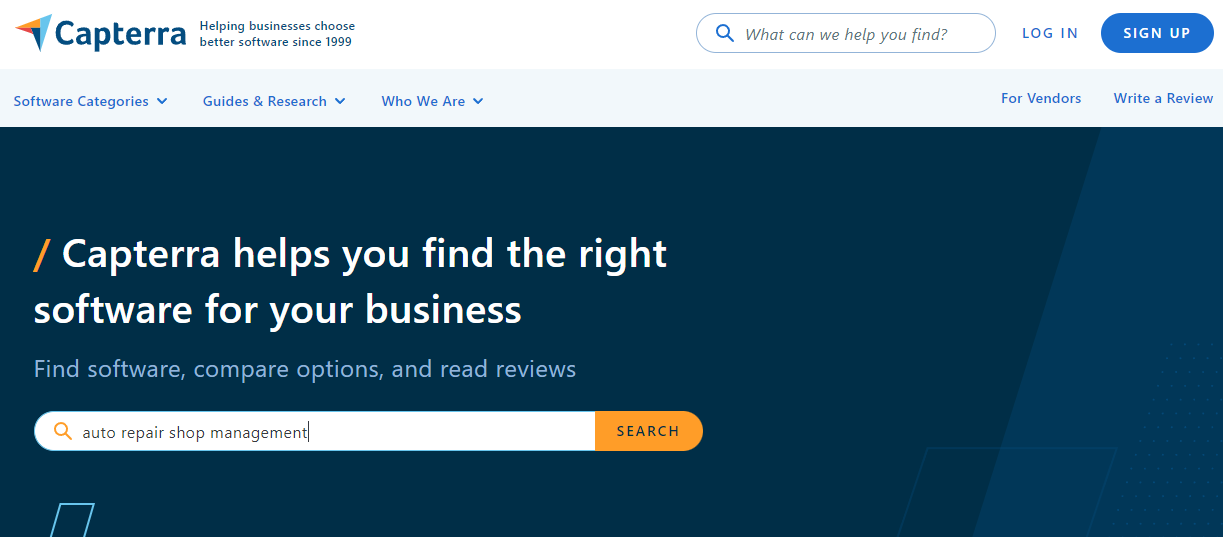
Searching the query will give us a list of softwares in the specific niche. Not only a list of products but also relevant categories and resources.
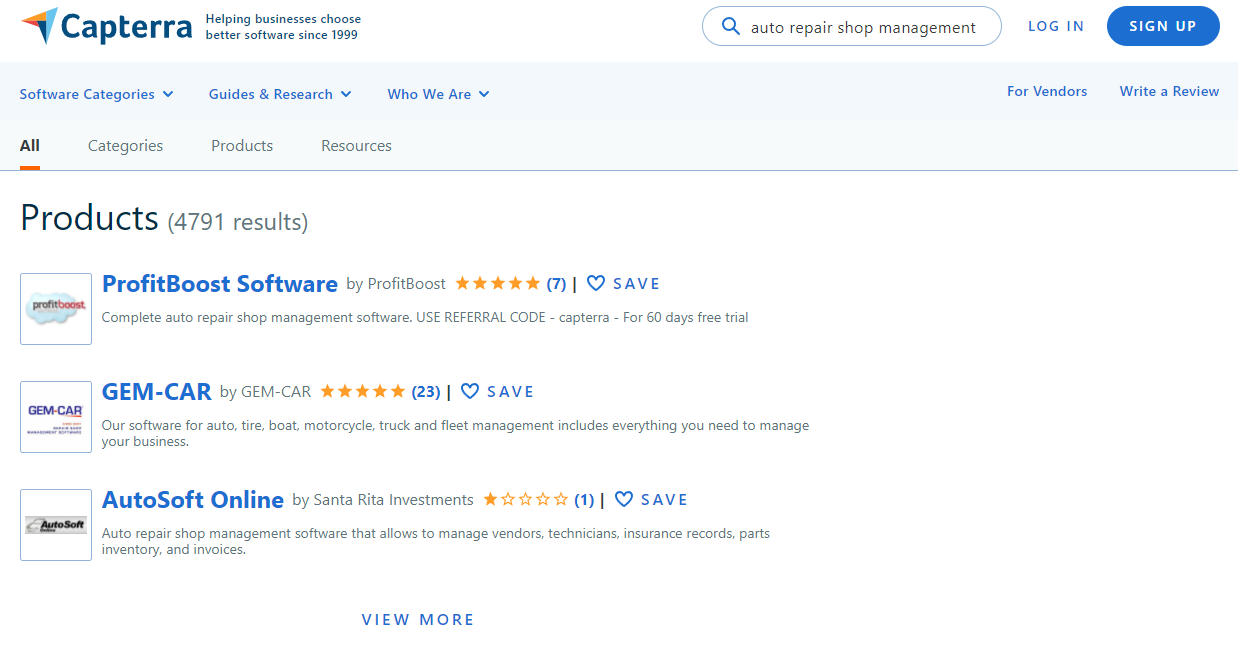
By clicking on each product, it will direct you to their separate product pages that will help you analyse the product in-depth. This includes the following:
- Pricing
- Features
- Alternatives
- Comparisons
- Reviews
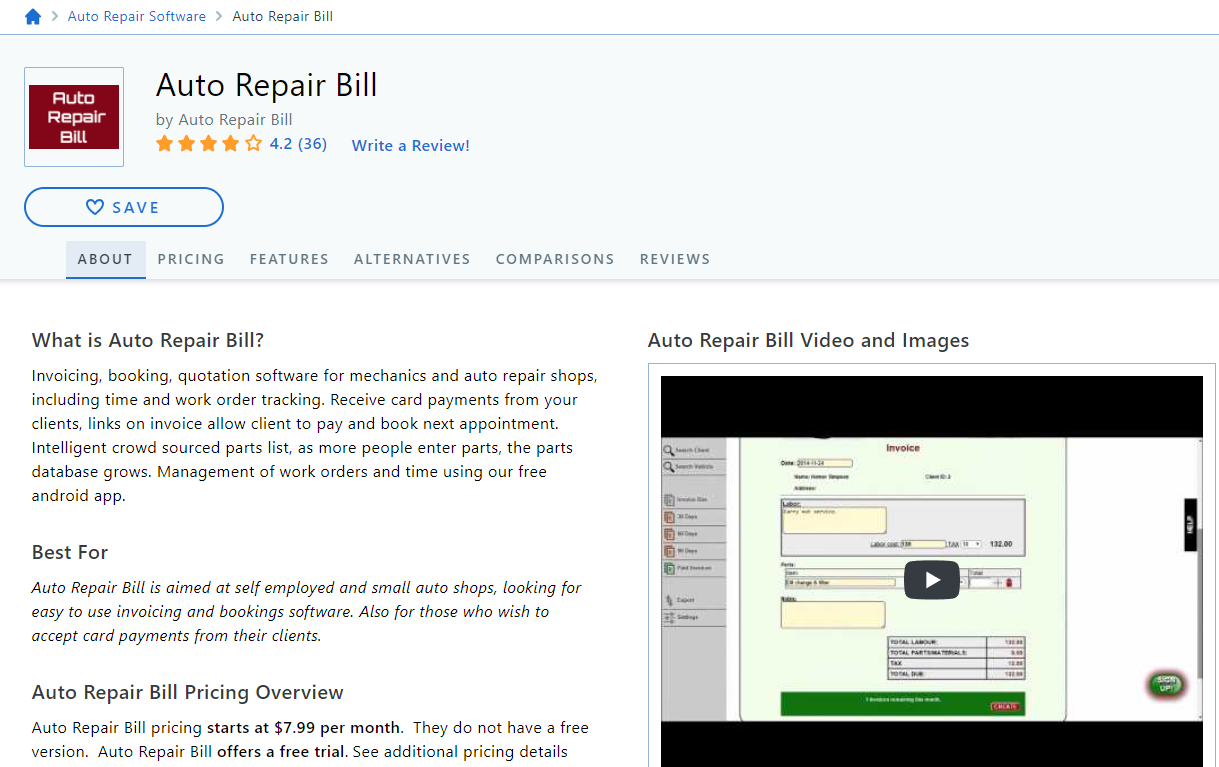
By going through each section, you will be able to find out detailed information about the product. This can help you create stand out features in your product and also improve your product with your competitor’s product reviews.
You can do the same to analyse multiple products and take key points.
Ahrefs For Analysing The Competitors
Once you have a list of your competitors, you can dig deeper into how they are driving traffic to their website and what kind of keywords are helping them the most.
Ahrefs is a paid tool which can help you in your research with just a few clicks.
Head over to the dashboard and place the website URL and you will see different metrics such as the list of countries which are helping the most, list of organic keywords that are driving traffic from search engines and much more.
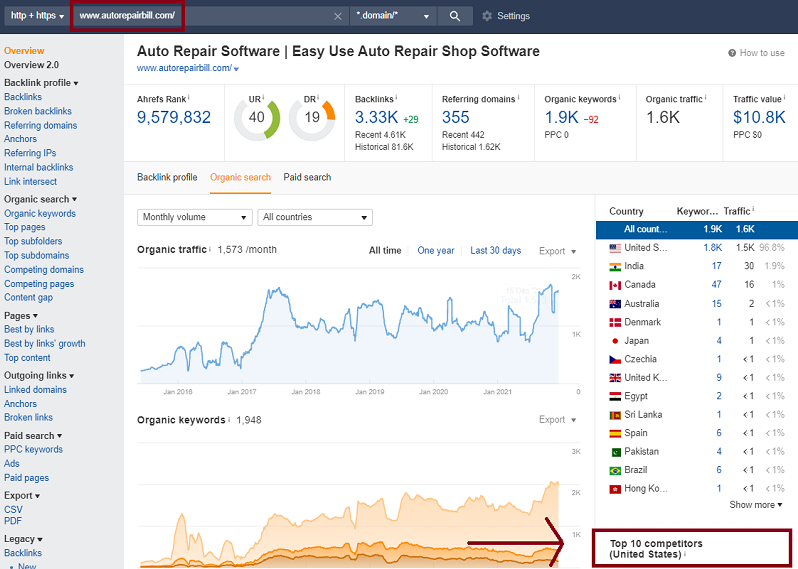
Then the next step is to select, Organic search > Top 10 competitors (this is country-based).
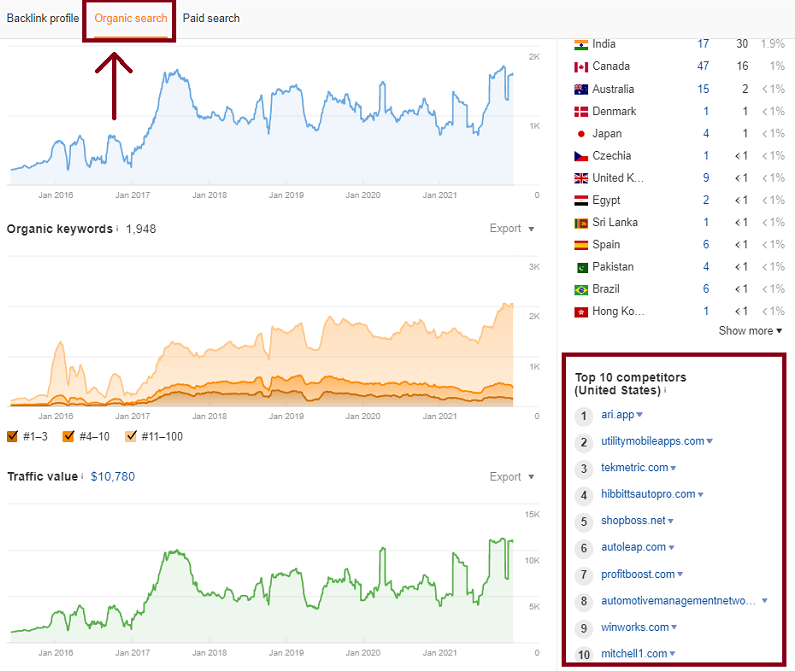
This will give you a list of competitors that you can pick and again place in the Site Explorer in Ahrefs to find out the top keywords that are driving the most traffic to that competitor.
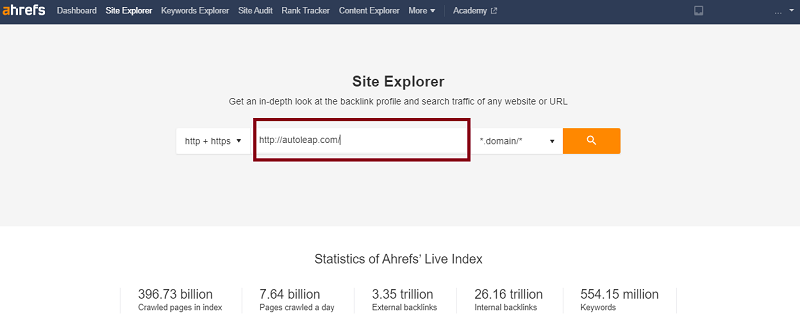
Once you have the report ready you can easily check the top pages, organic keywords, websites that have mentioned your competitor and much more.

The organic keywords report will show you the exact keywords and even their position in the search results. And similar to the keywords report the top pages report will show you the exact URLs of the pages and their top keywords.
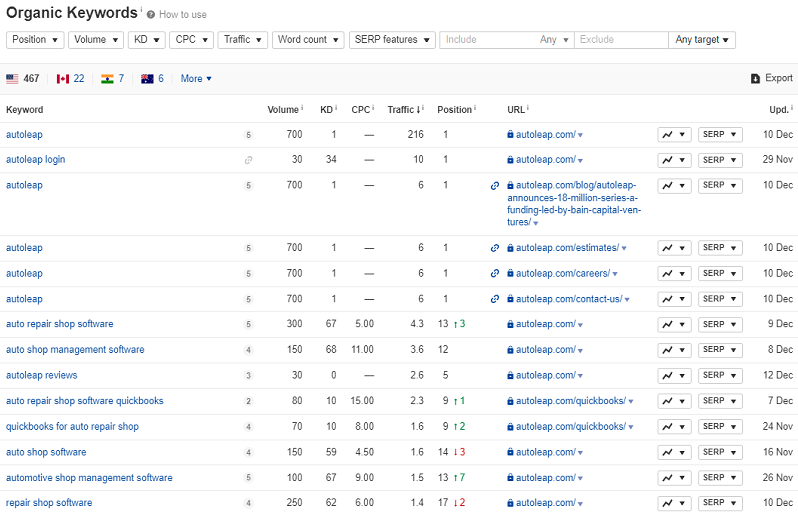
By doing competitor analysis through Ahrefs, you can easily create a compelling content marketing plan for your tech product. And also it will help you find avenues for promotion partnership for your product.
How To Conduct Technology Competitive Intelligence (3-Phases)
Phase 1: Collection
This phase is all about gathering intel on your competitors, but first, make sure to check the boxes below:
- Establish clear goals
- Identify audiences to be tracked
- Identify sources of intel
What audiences do you track?
There are 8 types of audiences tech providers usually track:
1. Direct competitors
2. Indirect competitors
3. Company's audience
4. Company's customers
5. Competitors
6. Thought leaders
7. Prospects
8. Partners
Collecting insights about each of the above audiences is worthwhile, but for our purposes, we'll be focusing on direct and indirect competitors.
Direct competitors are those with the same target audience as you, and you're in a one-on-one competition, which means there's no need for your products and theirs to be used simultaneously by your customers.
Indirect competitors, on the other hand, are companies that either sell a complementary product to your target audience or a similar one to a different audience. So you are both in the same category, but you don't go head-to-head for sales.
How often should you track them?
12% of tech providers track their indirect competitors on a daily basis, and 39% track them on a weekly basis. You do your math and choose the most suitable frequency.
Identify Sources of Intel
Sources of intel are anything from which you can collect information about your competitors like websites, colleagues intelligence, content accounts (e.g., Youtube), third-party review sites, social media, events, forums, news, etc.
Some sources are valuable no matter what your company's goals are at the moment, but there are many times where you may need to focus on one source in particular.
To help you get the most out of the intel collection:
- Stay regular and consistent; commitment does pay off.
- Embrace automation, set push notifications, subscribe to your competitor's blogs, Youtube channels, etc.
- Use positive reinforcement, especially when you're in the early stages of building a CI function.
Phase 2: Investigation
The investigation phase is dedicated to turning raw data into key takeaways to make it easier to organize, connect, and interpret competitive data points.
The framework or the comparison matrix for your competitive analysis is determined by the types and volumes of intel you've collected to simplify the process of extracting meaning from it and establishing action items accordingly.
Phase 3: Initiation
If you are the CMO reporting to the COO or CEO, this phase is where
you get your intel into the hands of the appropriate stakeholder(s). Does there need to be a third phase just for communicating results? Although there are times where an email is sufficient, this is not typically the case. In order to get your point across and inspire decision-makers to take action, you'll need to be thoughtful about your deliverables.
How To Find Competitive Data For Free Using Online Sources
Many reliable sources provide customer and market statistics at no cost to help prospective business owners analyze competition. Capterra is one of the tools you can use to monitor all your competitors' marketing channels in one place. It provides a snapshot of the software you're looking at and evaluates pros and cons with pricing info, features packages, and more to help you make a better, more informed decision.
SEMRush is another online source that helps in analysing competitors. You can explore any market, industry, or competitor by entering a single URL and getting an instant market overview. Understand market potential, spot trends, benchmark against the market, detect audience gaps, identify untapped market opportunities and get a larger market share.
However, not all information is just numbers and quantitative in market research. Some are just – conversational and qualitative.
In-depth customer interviews and other innovative research methods help obtain far more superior data quality. It is all about understanding customers' points of view and the deciding factors that influence their behavior. Focus groups, interviews, lifestyle immersions, observations, online forums, and other innovative research methods all help to understand "what" the respondents think and feel about a particular topic and "why" they think and feel that way.
Final Word
Competitor tracking isn't enough. Competitive intelligence has an incredible opportunity to help tech providers thrive in the post-pandemic world. But for effective growth and risk reduction, competitive intelligence needs to take a 360-degree view of our operating environment focusing on the outcome, not the output.
At CHASM, we help emerging tech providers optimize their growth and Go-to-Market strategies, applying industry-leading frameworks in a hands-on approach that will deliver instant results. Reach out to us at edwin@chasm.to